
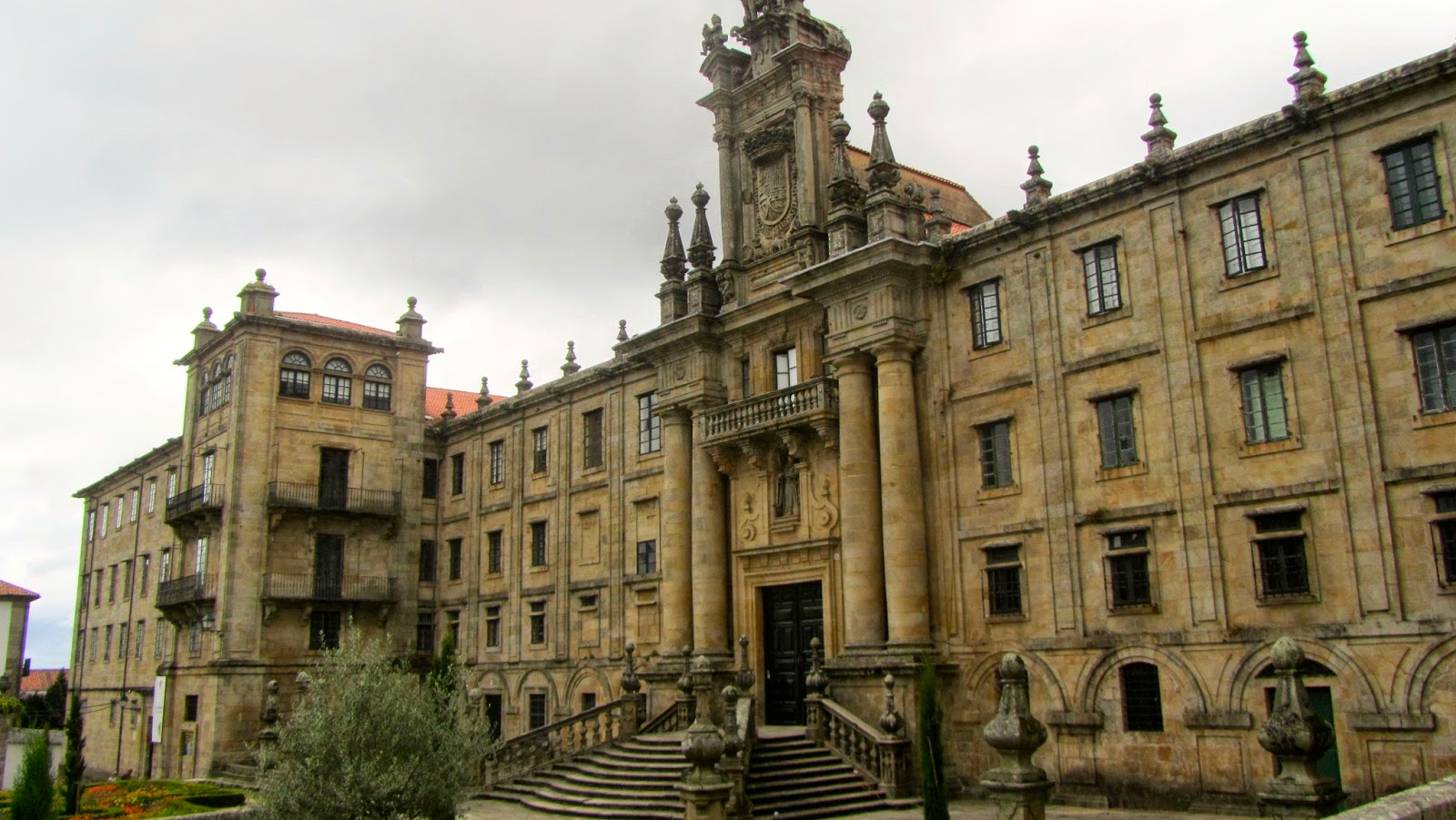
We lingered in Santiago for a couple of days after our arrival. We were staying at the beautiful Hospederia San Martin Pinario, a XVIth century monastery. Our rooms on the 4th floor were in the monk's lodgings. Cosy and compact they were perfect at 40 euros a night.
We attended mass on Sunday and saw the huge incense burner, known as the botafumeiro, as priests hoisted it in the air on a pulley system, and allowed it to swing through the cathedral, a spectacle in itself.

Interior of Cathedral of Santiago


 The year 2014 marked the 800th anniversary of the year St. Francis walked the camino from Assisi, in Italy to Santiago. As a result a special compostela was being offered at the church of St Francis in Santiago. This special certificate is only offered once every 100 years on the centenary. A year ago Cheryl and I were in Assisi and hiked to St. Francis's hermitage in the surrounding hills, so this had a special meaning for us.
One added feature of our walk on the Camino Portugues was having the
Spanish cycling race, La Vuelta happening at the same time as our walk.
As some of us are cycling enthusiasts this was of particular interest.
One day as we left Caldas de Reis on our way to Padron we veered off
course to a small village to watch the race as it came through. It took
9 seconds for the main body of the race to go by, like sudden tidal wave...
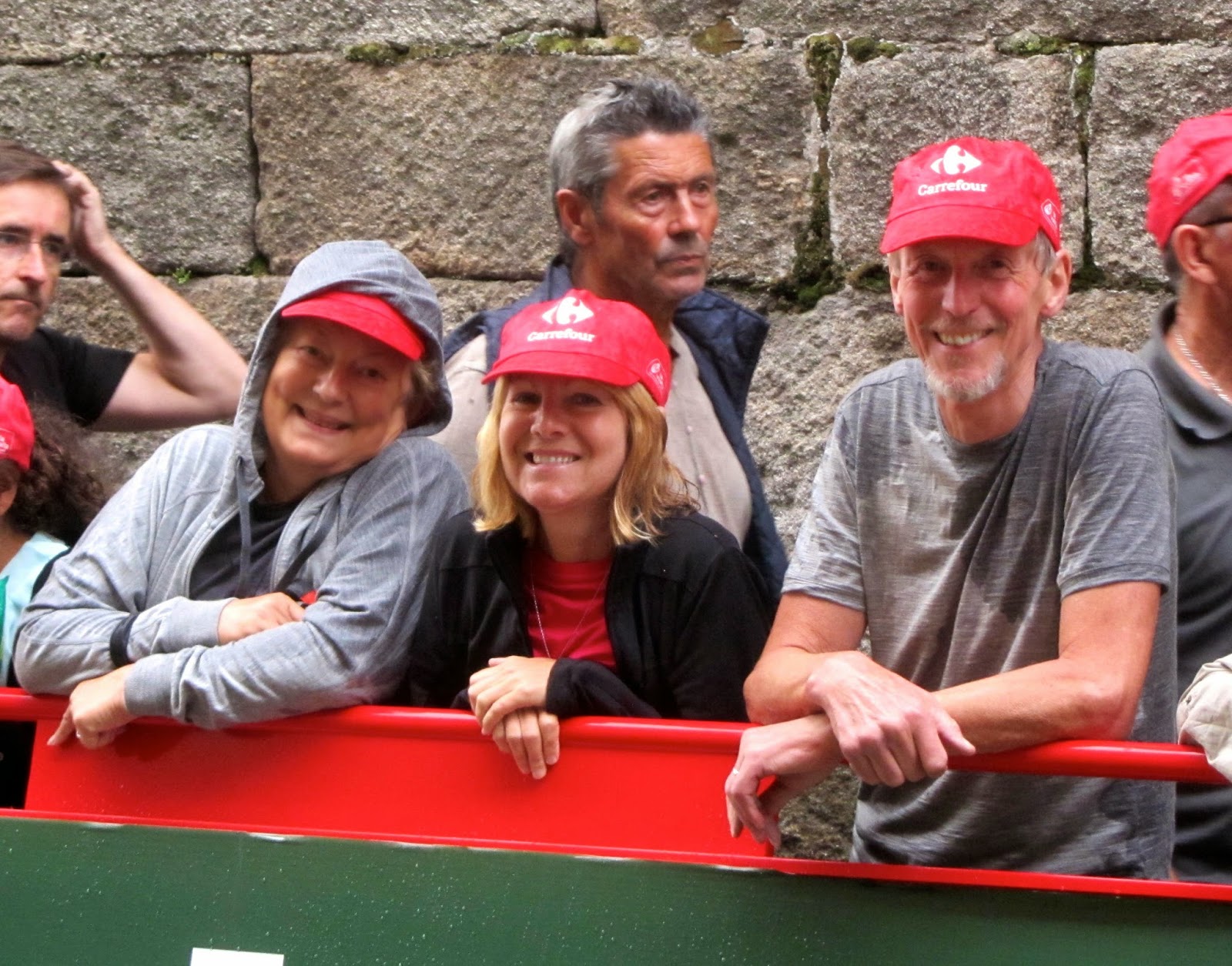
And then, two days after our arrival in Santiago we watched the finish of the race as it ended in front of the cathedral in Santiago this year. I don't know what arriving pilgrims would have made of the spectacle in front of the cathedral on this day, with the crowds, the stages set up, the trucks, trailers, billboard size tv screens and the music. I'm sure it was not the arrival they were expecting...


From our position 50 meters from the finish line we were able to watch the overall winner Alberto Contador as he arrived to claim victory...

The next day we left Santiago on Ryanair for Barcelona for a few days before flying home.


